

EARLY JUNE
A cold start for the beginning of the month with only 8-9 degrees at sunrise, even most of the birds were quiet until the sun rose higher. This female Rose Robin (above and below) is one of the two present at the moment at Banks Street Reserve, their contact call can be heard loud and clear walking right in the middle of the Reserve.


White-throated Scrubwrens (above) are very active and interactive with each other as this is the beginning of the breeding season for them, males are regularly singing out loud from the tall grass, low bushes and the undergrowth.

A male Rufous Whistler above.

Laughing Kookaburras

A Masked Lapwing in the morning darkness.

Pacific Black Ducks

A Little Pied Cormorant sharing a perch with a Pacific Black Duck.

This is what the fruits of the Foambark - Jagera pseudorhus, look like in early June, the bright wine-red of early April is long gone.

White-browed Scrubwren


A pair of Pale-headed Rosellas feeding on Tree Marigold flowers.
MID JUNE
The wether has been mild for a while now, some birds are showing the first signs of breeding behaviour such as singing, chasing, displaying and collecting nesting material: White-browed Scrubwrens, Red-backed Fairywrens, Noisy Miners, Pacific Black Ducks and Australian Brushturkeys.
 Red-backed Fairywrens, male above and female below are becoming much more active and noisy after being very shy and quiet for the last two months, they are now singing and collecting nesting material.

 The male Australian Brushturkey is back to his nest and his wattles look brighter.

A pair of Pacific Black Ducks on their favourite branch. Males are displaying now early in the morning, with their quick, high-pitched whistle and head-up tail-up display, quite a beautiful sight.
 Royal Spoonbill, non-breeding plumage.

 Some Silver-eyes show a darker shade of brown on their sides, they are of the subspecies lateralis visiting from Tasmania.
 The Sulphur-crested Cockatoo on the right is blind to one eye.

The Australian Wood Ducks have started looking for tree hollows, a female above.
LATE JUNE

A female Australian Magpie preening, the pair still has the young bird with them from the last breeding season.
Late June has been quite mild and rainy, signs of breeding have increased with more birds singing like the Tawny Grassbird and others looking for nests, like the Kookaburras. The gumtrees are flowering, more and more everyday, attracting many honeyeaters.
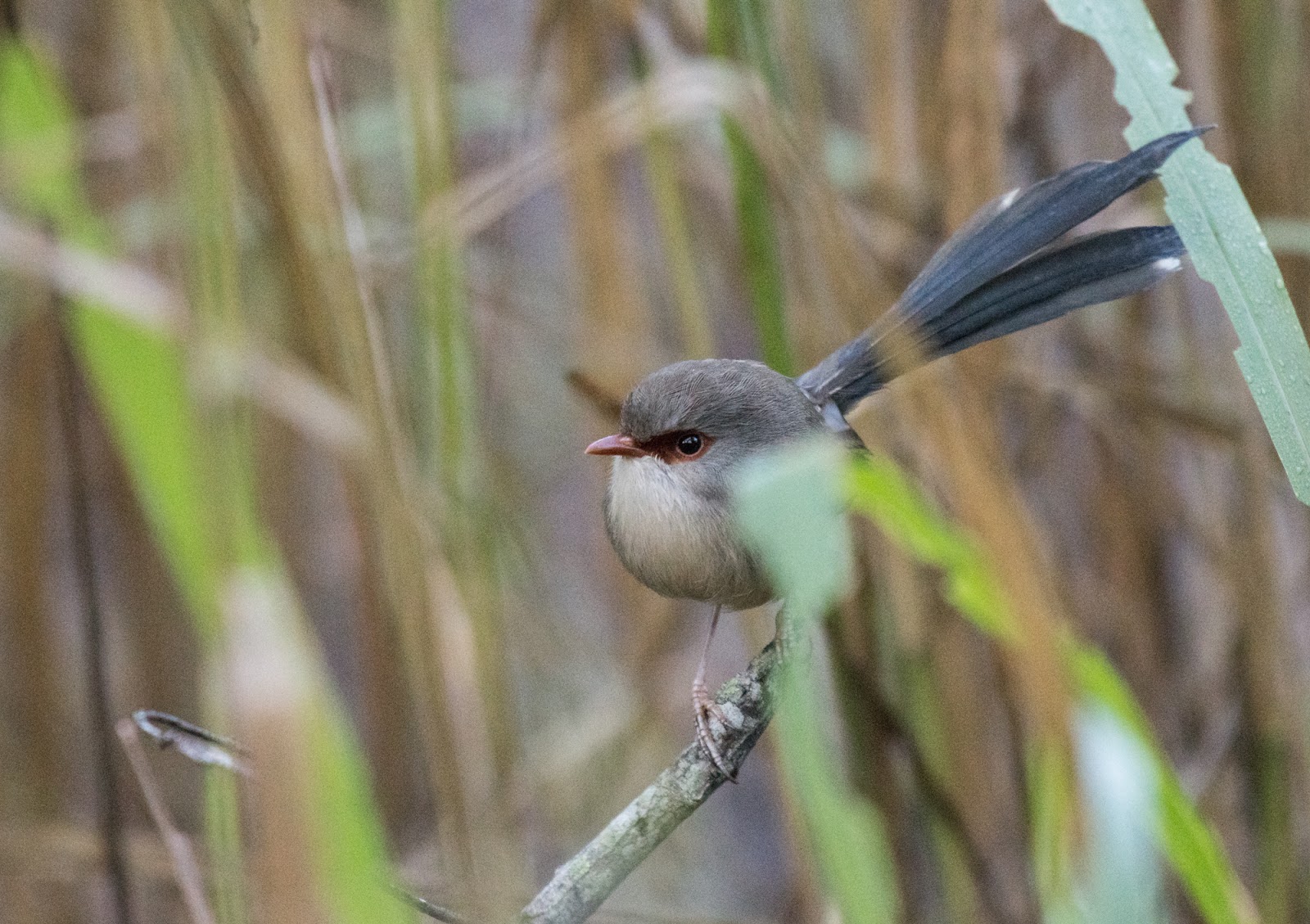
 Female Variegated Fairywren.

Blue-faced Honeyeaters and a Noisy Miner.
 Eastern Spinebill
 A male Brushturkey attending his nest, at some point he was inside a hole dug on top of the nest and then he run to a nearby female with his tail fanned and then he ran back to the nest. Is it a courtship behaviour?

Male Red-backed Fairywren.
This June I visited Banks Street Reserve nine times, I saw a total of 61 species of birds, on average 43.6 per outing. Here is the list for all the birds recorded this year in June.
MID JUNE
The wether has been mild for a while now, some birds are showing the first signs of breeding behaviour such as singing, chasing, displaying and collecting nesting material: White-browed Scrubwrens, Red-backed Fairywrens, Noisy Miners, Pacific Black Ducks and Australian Brushturkeys.


A pair of Pacific Black Ducks on their favourite branch. Males are displaying now early in the morning, with their quick, high-pitched whistle and head-up tail-up display, quite a beautiful sight.


The Australian Wood Ducks have started looking for tree hollows, a female above.
LATE JUNE

A female Australian Magpie preening, the pair still has the young bird with them from the last breeding season.
Late June has been quite mild and rainy, signs of breeding have increased with more birds singing like the Tawny Grassbird and others looking for nests, like the Kookaburras. The gumtrees are flowering, more and more everyday, attracting many honeyeaters.

Blue-faced Honeyeaters and a Noisy Miner.


Male Red-backed Fairywren.
This June I visited Banks Street Reserve nine times, I saw a total of 61 species of birds, on average 43.6 per outing. Here is the list for all the birds recorded this year in June.


