Little Pied Cormorant

Crested Pigeon. They too, have started calling and displaying to each other in this mild winter we had so far.

A male Fan-tailed Cuckoo

Male Golden Whistler

Spotted Pardalotes, female above and male below, are still very vocal and common.


Male Scarlet Honeyeater feeding on nectar.

Laughing Kookaburra

A male Rufous Whistler preening.

Australian Brushturkey

A pair of Black-faced Cuckooshrikes reappeared after a few weeks away (?)

MID JULY

More and more birds are expressing breeding behaviours, I was surprised to see a pair of Rainbow Lorikeets on the ground with one bird pecking and feeding on something and the other dancing around it.

It looks like a single Spangled Drongo is left in the reserve at this time of the year, maybe a male holding the breeding territory?

Australian King Parrots, female above, male below.


A male Australian Figbird, the orange-pink skin around its yes will become scarlet red in a few months during the breeding season.

The Crested Pigeons have started displaying and calling in pairs, for them too, the breeding season has truly started.
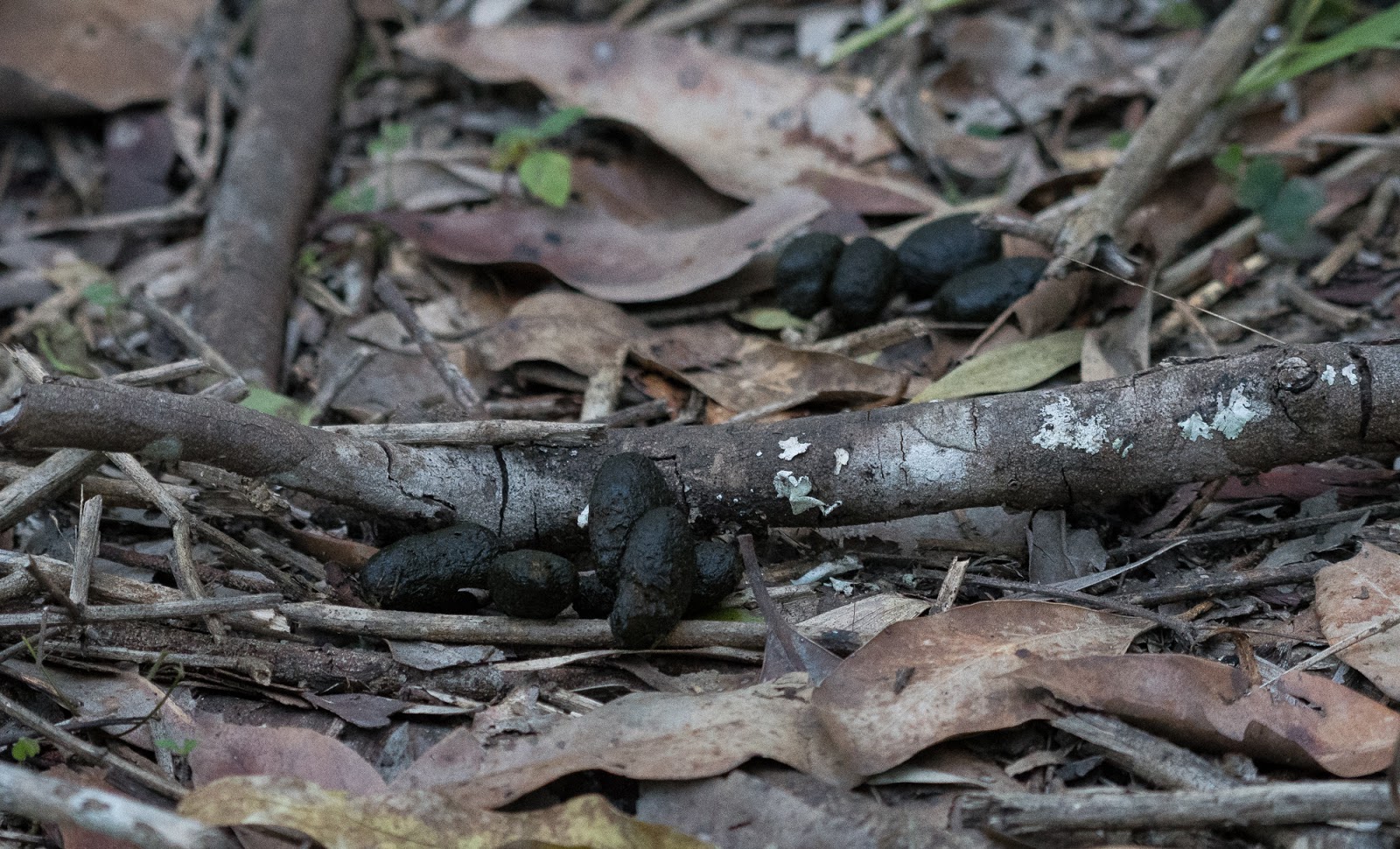
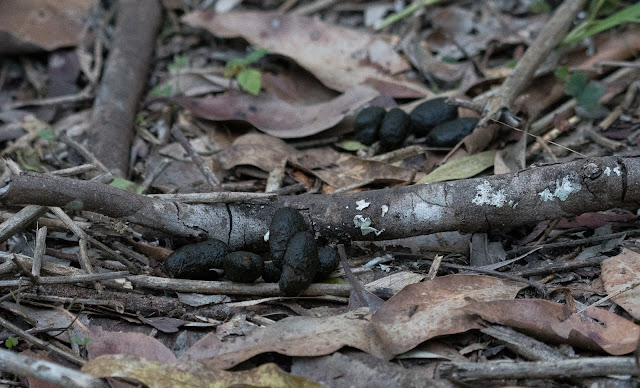 Maybe the Red-necked Wallaby is back.... I have heard something jumping in the bush and then I saw these fresh droppings.
 A cute Black Flying Fox.
 Two Eastern Spinebills were feeding in this flowering bush and one called repeatedly for a while.

A beautiful Queensland Silver Wattle Acacia poldalyriifolia in full bloom along the creek.


Grey Butcherbird calling
 Black-faced Cuckooshrike

Kookaburra expecting some food.
 I was very glad to be able to take a reasonably good photo of the Azure Kingfisher, here at the eastern bridge just where dogs love to swim at dog-walking rush-hour. I see the Azure Kingfisher more often during the cooler months and it is usually darting fast and calling along Breakfast Creek. Today 20.7.19 it lingered a little bit longer, looking down at the water for small fish.
 A Koala sleeping in the heart of the reserve, seen from one of the main tracks.

Masked Lapwing
LATE JULY
 Dusky Moorhen
 Much chasing, booming and territorial defence going on with the Brush Turkeys.

 Brown Gerygone, I didn't see it nor hear it yesterday, I thought it left for a rainforest at higher altitude but today (21.7.19) there it was, calling, preening and feeding among the canopy. I wonder how long before it will go to its breeding grounds.
 Much calling, singing and chasing around through the tall grass, low bushes and reeds for the White-throated Scrub-wrens.

 Finally after about two months, I saw the Brown Goshawk back in the reserve.
 Male Australian Magpie

A very shy Tawny Grassbird that I have been hearing singing from the carpark lately, maybe trying to attract a mate? I really hope it will succeed.

Red-backed Fairywren, male.


This July I have visited the reserve ten times, saw a total of 65 species of birds, on average 44.5 per outing. Here is the complete list of birds seen during this month.


A beautiful Queensland Silver Wattle Acacia poldalyriifolia in full bloom along the creek.


Grey Butcherbird calling


Kookaburra expecting some food.


Masked Lapwing
LATE JULY


A very shy Tawny Grassbird that I have been hearing singing from the carpark lately, maybe trying to attract a mate? I really hope it will succeed.

Red-backed Fairywren, male.

Royal Spoonbill

This July I have visited the reserve ten times, saw a total of 65 species of birds, on average 44.5 per outing. Here is the complete list of birds seen during this month.